![]() |
| Breakaway collars help prevent collar-related accidents and injuries. |
PetSafe® Brand Educates Pet Owners about How to Prevent Strangulation and Injuries During Collar Safety Awareness Week
How to Choose the Best Dog Food for Your Dog’s Size
![]() |
| Photo credit: mrbigben.com |
Gabe’s IBD Diagnosis: Why Kibble is Now the Enemy
| Gabe, the hero of our story |
A few days after we noticed Gabe’s changing behavior, Gabe didn’t eat his canned food at dinnertime. Gabe ALWAYS eats his canned food; in fact, he begs for it and scarfs it down like he’s starving. I thought perhaps he was just being fickle and no longer liked that particular flavor of food. My husband and I passed it off, and didn’t think much more of it until that evening when there was a trail of blood outside of the litter box.
I had already gone to bed when my husband noticed the blood. It was just a few mucousy drops, but it was still very alarming. My husband woke me up and told me about the blood, and I immediately noticed Gabe wasn’t laying at the foot of the bed in his usual location.
“Where’s Gabe?”, I asked in a panic.
I searched the bedroom for Gabe, and my husband searched the basement. We called out his name to no avail. A few moments later I heard my husband’s voice yelling, “Please come down here!” In the basement I found my husband standing over poor Gabe, who was crouched under the stairwell looking positively awful. His coat looked lackluster and dull, his eyes were wide and frightened, and he was clearly attempting to hide. I reached down to pet Gabe, and he let out a pitiful meow. Something was clearly very wrong.
We made the immediate decision to take Gabe to the emergency vet clinic on the other side of Madison. The blood outside the litter box coupled with Gabe’s hiding in the basement had us fearing the worst. As my husband drove us to the clinic, I began to Google Gabe’s symptoms on my iPhone. The more I read, the more I became convinced Gabe was suffering from a flare-up of IBD (Inflammatory Bowel Disease.)
When we got to the vet clinic, a nice nurse took us into an exam room and weighed Gabe. He was down to 8 pounds, and was very dehydrated. Gabe’s temperature was also unusually low. The vet did an examination, checking for any evidence of urinary discomfort (due to Gabe’s history of struvite crystals). Though Gabe was clearly not well, the physical exam did not show anything unusual other than some slight hardening of the intestines. The vet’s diagnosis? Gabe was suffering a flare-up of IBD.
The vet gave us a few options of how we could treat the issue at hand, and we decided to treat the immediate flare-up with some painkillers, subcutaneous fluids, a bland diet, and some probiotics. The vet informed us that IBD is something Gabe will always live with, and there are numerous ways to diagnose the root cause. A full blood panel could be done, an intestinal biopsy could be taken, etc. My husband and I both decided that at 12+ years of age, we have no desire to put Gabe through a barrage of invasive tests just to prove what we already know. I decided to go back to the drawing board, and do some research.
After hours of researching IBD, I came to realize that Gabe’s issues were probably caused by his diet. I had been feeding the cats canned food for dinner every evening, but it was always flavored with some sort of fish. As it seems, many cats cannot tolerate fish and in fact are allergic to it. I had no idea! My cats were also on a primarily dry food diet. Though the food I was buying was high-quality, I learned that dry food diets are in no way ideal for cats. In fact, most cats on dry food diets go through their lives partially dehydrated. Dry food diets can be linked to diabetes, obesity, renal failure, and IBD. I decided to go for the gusto and switch the cats over to a canned diet only.
![]() |
| The trio of moist food munchers |
Let me tell you…the transformation has been amazing. After cutting out the kibble and switching to canned, the health of the cats has visibly improved. Gabe’s IBD symptoms disappeared, and his chronic yeast infection in his ears has subsided. Our Birman’s tear staining stopped, and her intermittent diarrhea has not returned. All three cats are more active than they’ve been in years. I could hardly believe the difference the diet change made! I’m now experimenting with a raw diet for the cats, so we’ll see how that goes. I’ll keep you updated on the diet changes!
The moral of the story? Ditch the kibble! Gabe says so!
Interactive Treat Toys for Dogs
Treat toys for dogs are great toy ideas for several reasons. Did you know that bloat is considered to be the leading cause of death in dogs? For dogs that eat too quickly, treat toys can cause the dog to slow down and as a result gulp less air in. Slowing down a dog's eating is the best way to prevent bloat. Another reason treat toys are great is because they stimulate your dog mentally. Many of the toys are puzzles and cause your dog to use problemsolving skills. A mentally stimulated dog is a happy dog!
Here are some great treat toys to consider for your dog:
The idea behind the Nina Ottosson's "Dog Tornado" is for the dog to dislodge the removable bones, then turn the revolving sections to reveal the hidden treats. The Tornado has many variables to increase the level of difficulty as the dog's skill improves. With a little practice he will soon learn to dislodge the bones and turn the Tornado to access the hidden rewards.
With eight treat or food chambers, Kyjen Dog Games Treat Wheel combines the difficulties of Star Spinner and Paw Hide. The dog must use its mouth to lift each cup, then spin the top to reveal more treats. Rubber soles prevent slippage.
Premier Busy Buddy Kibble Nibble Dog Toy
3 Illnesses that Affect Both Pets and Their Owners
When we think about getting sick, we think of boxes of tissue, days spent in bed, chicken noodle soup, and, for pet owners, a warm nose snuggled up next to you. Pets have a way of just making a sick day at home that much better. It's a widespread fact that people who have four legged companions live longer, healthier, and happier lives. That being said, there are times that our loving animals feel under the weather along with us. There are many different human and pet illnesses that cannot be passed from one of us to the other. So, if your cat or dog has the sniffles or a cough, it's most likely that you have no worry of catching it—but, there are several illnesses that can be passed from pet to owner and owner to pet. Keep these three illnesses in mind next time you or your pet are feeling ill. Being educated on what can affect your pet and yourself as a pet owner is the best defense.
![]() |
| Though generally not caused by the same type of mite, both humans and animals can become infected with scabies. Photo credit: scabies-information.com |
For the most part, our pet cats and dogs have little to worry about when it comes to mange. Indoor cats that are well kept will very rarely get mange or scabies, but it can be fairly common in dogs. The mange that is also known as scabies is highly contagious to humans and can be contracted by dogs as well. This mange is caused by mites and will appear with symptoms of severe itching, skin irritations, and hair loss. In both dogs and humans, scabies should be treated as quickly as possible. While the illness itself is not immediately threatening, secondary infections can occur quite easily with open sores on the skin. This kind of mange can be avoided with careful hygienic care and some general attentiveness to your pet's skin condition. The mites that cause mange are commonly found on the ears, face, and extremities.
![]() |
| Toxoplasma Photo credit: marvistavet.com |
While this parasite can be found in any warm-blooded animal, cats are one of the most common pets to come into contact with it. Cats make ideal hosts for the toxoplasmosis parasite. Cats will become infected by preying on infected birds or rodents and will show no symptoms of the disease, making it extremely challenging to detect. Many people are exposed to the disease without ever showing symptoms or even knowing. However, in individuals who have weakened immune systems or are pregnant, toxoplasmosis can cause headache, sore throat, muscle pain, fever, and general malaise. Humans come into contact with this illness through infected kitty litter.
![]() |
| The classic ring-shaped patches characteristic of ringworm. Photo credit: diseasespictures.com |
To the surprise of many, ringworm is not actually a worm or parasite, but actually a fungus. The name comes from the commonly ring-shaped display the fungus gives on the skin. Ringworm can be transmitted from pet to human or from human to pet very easily. It is a slow growing fungus that feeds on dead skin cells and the hair of all species of mammal. The most common form of ringworm is often found on young cats and dogs. The spores can be transferred easily from one surface to another. On pets it appears as a dry, oval, scurfy patch of broken fur. This is one of the most common diseases transferred from pet to human and human to pet of all the illnesses on this list. Keep these three things in mind to better care for yourself and your pet.
Today's guest post comes courtesy of Amelia Wood, who often writes about medical billing and coding certification and welcomes your responses at amelia1612@gmail.com.
Keeping Pets Happy and Cool in the Summer Heat
Pet safety during summertime is always important, but the intense heat this year can make practicing hot weather safety a matter of life or death. Pets are like family members and you want your pet to be happy and comfortable. If you have an indoor or outdoor cat or other pet, it's important to consider how you can keep your furry friend safe on days when the temperatures rise above your pet’s comfort level. These tips can help you be proactive about your pet's safety, while allowing your cat to stay comfortable throughout the summer.
Hot Weather Safety for Outside Pets
• Providing a Cool Place to Rest. A cool, shady place to lie down is important for outside pets. A dog might appreciate having a kiddie pool to lie in, but a cat probably won't use one. Cats and dogs alike will seek out cool areas in a shady garden where the soil is naturally cooler. Cement areas in the shade also provide a nice area to keep cool.
![]() |
| Outdoor waters like this one give your dog access to fresh water at all times |
• A Way into the House. A pet door provides your dog or cat with a way to get inside where it's cool. This is especially helpful if you’ll be away from home while your pet is outside.
Safety Tips for Indoors
• Keep it Cool with Air Conditioning. Set the air conditioning at a comfortable temperature so your pet can keep cool while you're at work. To ensure your air conditioner provides as much cool air as possible, change the filter at least once a month.
• Fresh Water Daily. Sufficient water supply indoors is just as important as it is outdoors, even if the temperature is cooler. It's better to err on the side of caution and leave out a bowl of water that's too big than to return home and find your pet's water bowl completely empty.
• Close Pet Doors While Away. It's wise to close or lock the door to prevent your furry friend from going outside on extremely hot days. Most dogs can make it for several hours before they have to go to the bathroom. If you have a puppy or older pet, hire a pet sitter to let them out once a day. Some cats enjoy going outside, but it's not necessary since a cat can use an indoor litter box.
Prevent Heat-Related Conditions
Most pet owners have good intentions and don't set out to put their pet at risk of heat exhaustion. As much as your pet might enjoy car rides, it's best not to bring your dog or cat in the car with you unless you can bring him or her inside once you arrive at your destination. The temperature of a closed car, or even one with the windows cracked open, can get hot fast and put your pet in potential danger.
If your cat shows signs of heatstroke, such as heavy panting, drooling, staggering or disorientation, wrap his or her body in cold, wet towels, mist with cool water and place an ice pack nearby. Quickly take your pet to the veterinarian to get life-saving, professional care. Fast action is imperative to safeguard your pet's health.
The best approach to heat-related safety issues is one that's proactive. Know how to keep your pet cool and follow through with it each day.
Cameron Tyler loves his pets and replaces his air filters every month to make sure his pets stay nice and cool in the summertime.
Infographic Guide to Puppy CPR
Throughout history dogs have been our friends and companions. They have helped us perform work, enjoy play, and travel from place to place. Some dogs assist us when we have special needs we cannot manage on our own. There have been instances where dogs have even saved our lives. A time may come when a dog or puppy you know will need a human to save its life. Would you know how to perform puppy CPR?
Learning canine CPR allows dog owners and dog lovers to be prepared in the rare instance that their dogs need life saving interventions. For breeders or owners who whelp puppies, it is imperative to become familiar with how to care properly for pups that are born in cardiac or respiratory arrest. The steps to perform puppy CPR are not difficult, but they just may be the best gift that you can give to your canine
friend. Learn more about puppy CPR in this educational infographic:
(Click on any part of the infographic for a larger version)
Combating a Serious Flea Problem
This peculiar lifecycle explains why in order to successfully eliminate fleas from your household you need to focus on the animal's body (where the adult fleas are), and areas where the pet spends a majority of its time (where the eggs and larvae live). Adult fleas are best attacked with IGRs or insect growth regulators. IGRs are a group of pesticides that quite effectively destroy the reproductive system of insects but are essentially harmless to mammals. These are the products that are squeezed from a small tube onto the dog or cat's neck or spine. Frontline and Advantage fit this description, for example. Follow the instructions carefully, as the flea's lifecycle is longer than the effective period of these products. Also, be aware that these products are strong chemicals and you should consult a vet before using even the over-the-counter versions. Homemade remedies such as sticky pads and diatomaceous earth (DE) will kill some fleas, but generally cannot be used to eliminate the entire flea population.
But removing the adult fleas does not solve the overall problem. Outdoor areas your pet frequents must be treated with a pesticide as well, usually a hose end sprayer full of a pyrethrin-based poison. The pet's bedding should be washed frequently in hot water and that and other areas your pet spends time in must be vacuumed. Then vacuum again often, as the vacuuming will cause vibrations that encourage the flea pupae to hatch and move around seeking a host. Young adult fleas will work their way out of a vacuum cleaner bag eventually, so empty your vacuum far away from the house or use a product like Flea Vac pellets to kill these insects inside the vacuum cleaner. These steps must be repeated periodically as well, to ensure you are capturing each successive generation of fleas.
Flea infestations can be maddening. But with a good plan and by staying mindful of the flea's lifecycle, any flea population can be brought under control and removed from your house.
About the Author
August Bering V, "Augie" to his friends, is President of Bering's Hardware in Houston, TX. Bering's is well known for a broad range of carefully selected home goods such as outdoor living products to pet products, and red carpet service that has delighted customers for generations since 1940. From your bridal registry, decorating your first home, to your first baby registry, Bering's has special gifts for special occasions and the right tools for the right job. Augie enjoys spending time with his family and friends, grilling and cooking, playing hard outside, travelling, design, art, live music, and spending as much time as he can with his family.
5 Reasons Cats Pee Outside the Litter Box
Having your cat urinate outside the litter box is one of the most challenging behavioral issues a cat owner can face. Not only can it be expensive to clean and/or replace your furniture or carpet, it can create a big rift between you and your cat.
There are many reasons your cat might stop using the litter box, some which you may not have even thought of. Though this list is by no means all-inclusive, here are five of the common reasons a cat will pee outside the box.
The first thing you should rule out when your cat stops using the litter box is a health issue. Things like a bladder infection, UTI, or struvite crystals often cause a cat to stop using the box. When the cat strains to urinate and it is painful, they may develop an association between the litter box and pain. You may find your cat urinating on smooth surfaces such as in your bathtub, on your linoleum, or in your laundry basket. The cat perceives these smooth surfaces as a more comfortable place to urinate. Taking your cat in to the vet as soon as you notice these symptoms is very important; fortunately, most infections can be easily treated with antiobiotics and the litter box avoidance issues should resolve on their own.
![]() |
Fine grained cat litter is the most accepted litter
Photo Credit: pets.webmd.com |
The type of cat litter you use may not seem like a big deal, but it is to your cat! One common mistake cat owners make is buying heavily scented cat litter. Most commercial litters are scented to cover up odors; this may be good for the owner, but it’s not good for the cat. Cats have a much keener sense of smell than humans, and perfumed cat litter can be absolutely overwhelming to their sensitive noses. That alone can be enough to make a cat avoid the litter box! Consider purchasing unscented cat litter for your cat’s box.
The texture of the cat litter can also be very important to your cat. Out in “the wild”, cats bury their waste in sand or another finely grained substrate. Some commercial cat litters are made of larger, hard chunks of clay that can be painful to the feet of sensitive cats. Many cats simply will not like the texture. In general, cats prefer a finely milled clay litter.
Many times when we choose the cat’s litter box, we choose what is convenient for our home. We fail to take into account the cat’s psychological and physiological requirements. If you notice urine or feces directly outside the litter box, do not automatically assume your cat is not using the box. They may just be using the *wrong* box for them! It is not uncommon for cats to “do their business” at the very back or very front of their litter box, thereby hanging their back end over the side of the box and missing it entirely. Sometimes this can happen due to their litter box being too small, but sometimes it can just be due to the way your cat likes to “go”.
![]() |
| A Rubbermaid tote litter box Photo Credit: paws-and-effect.com |
Speaking of covered litter boxes, these can also be a common reason for a cat to urinate inappropriately. In a multi-cat household, a covered litter box can make a cat feel trapped while they potty and make them feel susceptible to ambush. Rather than put themselves in perceived danger, they may just stop using the litter box altogether and find a more open place to urinate. A covered litter box can also be problematic in a single-cat household. Though we humans like the idea of keeping the cat’s waste out of sight, we must again take into account the cat’s keen sense of smell. A covered box tends to trap in odors, particularly the ammonia from urine. This can easily become overwhelming for a cat and cause them to avoid the litter box entirely. If a covered box is absolutely necessary, it should be cleaned on a daily basis and sanitized once weekly to keep odors at bay.
Location of Litter Box
You like privacy, and so does your cat! Your cat’s litter box should always be placed in a quiet, low-traffic area of the house. Many people choose the basement, laundry room or bathroom. You should never place the cat’s litter box in a busy area of the house like a child’s playroom, and the cat should never have to cross a very busy area to get to their litter box. The box should be placed in an area where the cat can keep a lookout while he does his business. Though they’ve been domesticated for a very long time, cats still have strong survival instincts and need to be on the lookout for “predators” while they are in a place as vulnerable as their litter box. As such, the box shouldn’t be tucked away behind a curtain or in a hideaway if possible.
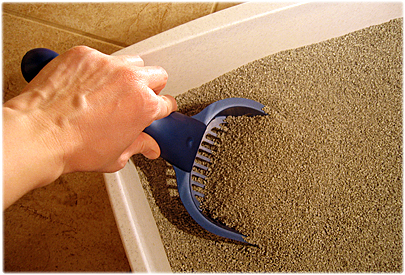
Homes with multiple litter boxes should also strategically place them throughout the home, on different levels and in different rooms. It may seem easiest to place several litter boxes next to each other, but doesn’t that just defeat the purpose of having multiple boxes? Many cats prefer to urinate in one box, and defecate in another. You may find that your cat likes to urinate in the litter box upstairs, while she prefers to defecate in the box in the basement. Cats like options!
![]() |
| Thanks for keeping my potty clean! Photo credit: consciouscat.net |
Does Motor Oil Really Help Against Demodectic Mange?
You may have heard this one before: “If your dog has demodectic mange, just get some motor oil and rub it on the infected parts. It’ll get better, trust me!”
This remedy has all the features of an old wives’ tale. A rumor heard from a bar somewhere? Check. Advice supposedly passed down from ‘seasoned veterans’? Check. Implausible solution? Double check.
Alas, this particular remedy sounds too good to be true, and it is. It’s pretty much a given that whenever an industrial-grade fluid touches naked skin, the results will always be unpleasant. This includes dumping the stuff on a dog with a skin problem.
![]() |
| Photo credit: amazonpilgrim.com |
That’s all just on the surface too, but it gets much worse than that. When a dog absorbs the oil through the skin, it penetrates the body and affects the internal system as well. Obviously, this causes a whole new host of problems, such as drastic changes in the blood pressure, as well as severe kidney and liver damage.
All this makes for a list of things horrible enough to get nightmares from, but unfortunately there’s one more gruesome aspect left to cover. Remember how dogs just love to lick and bite themselves all over, especially if they have demodectic mange? Well, what happens if they follow their instincts and proceed to lick their own skin… after being coated with motor oil?
Yes, they’ll swallow it, and the oil will induce vomiting, which in turn will introduce some of the oil into the lungs as well. This subsequently gives them pneumonia.
That should be enough of a reason why you should never, ever use motor oil to treat demodectic mange.
Now that we’re clear about what not to do, however, let’s indulge in our curiosity a little more. Why the heck did people use motor oil in the first place, anyway?
Motor Oil probably did cure demodectic mange once, buuuuuut…
![]() |
| "Please leave the motor oil to your engine, and the mange treatment to your veterinarian!" |
Yes, there’s a good chance that it was used as a treatment option successfully. Obviously, even this statement could be false – I’m really just speculating here.
I’ve found that there’s actually a coherent reason why it was viable then, but not now. But rather than jump into conclusions from the get-go, let’s walk through my little pet theory first. It’s essentially made up of three key points, the first being:
Motor oil produced 50 years ago had a different chemical makeup than the ones available today.
It’s no secret that the oil produced nowadays are very different from the ones made 50 years ago. There have been many changes to its chemical properties since then, but one of the more significant ones concern the level of sulfur present; it’s much, much lower than it once was.
Most people used burnt motor oil for mange treatment – fuel that was already spent in some form.
One interesting trend that I’ve been coming across is the fact that many of those who vouch for the oil’s viability used burnt versions of motor oil. They swore up and down that it worked, even though many other people horrifically disagreed. Keep in mind that this was what they did, not what they heard somewhere.
It’s also worth noting that burnt motor oil still contains a fraction of sulfur in it. But what’s all this talk of sulfur about, anyway? Well, it actually turns out that…
Sulfur is actually a pretty good deterrent to parasites.
The chemical is commonly used to treat parasites on both pets and humans, and there are many products in the market that include sulfur as a main ingredient. In fact, some demodectic mange remedies also include the use of sulfur in their procedures.
So it’s not much of a stretch after all for motor oil to be perceived as a good remedy for demodectic mange. In the past, the higher sulfur levels may have helped initially in clearing up the skin problem, which led to the unlikely remedy that we’ve been hearing about for ages since. The current users of burnt motor oil may also be seeing some form of success because the sulfur content was actually having a positive effect on the dog.
However, I hope you haven’t forgotten that motor oil is definitely not acceptable as treatment for
your dog’s demodectic mange! Some may indeed have gotten lucky and had their dogs’ mange cured by it, but it’s still a very dangerous method to use and will most definitely not work out for most other dogs.
Besides, there are other, better options out there. Why would you choose to dunk your dog in a smelly, greasy liquid instead?
Need more information on safer and easier home remedies for demodectic mange? Just visit dogskintreatments.com to find out more.
Is it Healthy to Start Your Puppy on an All-Natural Puppy Food Diet?
![]() |
| Photo credit: dogsnaturally.co.uk |
The most obvious reason to start a puppy on an all-natural puppy food diet is the ability to control what he or she eats. When you make complete nutrition puppy food at home, you are ultimately in control of what the puppy consumes - something that you can't always do with a store bought puppy food brand. You do not have to worry if the puppy is consuming products that may be recalled in the future. The widespread pet food recalls of 2007, along with products still on the market that are reportedly dangerous, make many pet owners justifiably afraid of giving their pets a product that may be harmful to them. Because a puppy is more vulnerable to the possible dangers of commercially-produced pet food, deciding to prepare an all-natural, home-cooked diet is one way of preventing this issue.
While deciding to put your puppy on an all-natural diet may seem to be in the dog’s best interests, remember that there are some major downsides to selecting this dietary path. Preparing puppy food requires a great deal of planning—an issue with busy lifestyles. Puppies also have special dietary needs, which have already been addressed with commercial dog foods. Although it is possible to prepare all-natural pet foods at home despite a busy lifestyle with good planning, homemade pet food can also be cost-prohibitive. Because dogs require a meat-rich diet, the expense of healthy meats may increase the cost of feeding a pet considerably versus purchasing commercial dog food.
One compromise that many make in this argument is to select vet-recommended brands of pet food. Many of these brands are purchased exclusively at veterinarian’s offices. Other options include pre-made natural pet foods—containing real meat, vegetables, and small amounts of grain—often sold at major pet stores in the refrigerated section.
Choosing the right diet for your puppy can be a difficult decision. There are many dietary choices available for pet owners. Selecting the right diet for a puppy is a matter of weighing multiple considerations: time, cost, risk, nutrition, and lifestyle.
Did You Know That Demodectic Mange Comes In Two Different Types?
Demodectic Mange is a single specific skin problem in dogs, but what people usually don't realize is that it's often categorized into two types: localized and generalized. The main difference between the two is the severity of the symptoms in each type, but there are others as well, such as the locations of these symptoms on the body.
![]() |
| Spots of localized mange Photo credit: k911.biz |
The symptoms of localized mange are generally milder than generalized mange; they mainly appear as small bald spots, and no more than five of them at that. The symptoms also frequently appear on the area around the head and neck, as well as the paws. It’s definitely possible for it to manifest in other spots, but the main feature to note is the limited number of bald spots that can be seen.
![]() |
| Generalized mange on a bulldog Photo credit: findavet.us |
This variant of demodectic mange is much more serious than the localized one, and if you’ve seen a dog with it before, you’ll know exactly what I mean.
In contrast with localized mange, generalized mange covers practically the entire surface of the body in red rashes, and the skin is further damaged in spots where the dog has scratched itself. This can result in some serious scarring, and it can be a very ugly sight if it isn’t stopped.
Why are there two different types of demodectic mange?
The distribution of localized and generalized mange may seem random, but the truth of the matter is that the severity of demodectic mange is predetermined by one simple factor: the immune system.
![]() |
| A demodex mite. Eww! Photo credit: sciencephoto.com |
If a dog’s immunity is brought low for only a short time, the mites will only be able to affect a select few areas of the body before they are overcome again. This brings about symptoms that are classified as localized mange. Incidentally, puppies and dogs that have been ill are the only ones that get localized mange, and in their case, the immune system is easily repaired with just a bit of care given to them. Puppies will eventually mature and fully develop their immune system, and adult dogs will eventually recover from their illnesses.
This malfunctioning immune system is genetic in nature – it’s passed down from parent to child, which means that these dogs have had a weak immunity since the day they were born. Because of the nature of this disease, it’s also highly likely that their mother has the same trait as well. This defect will eventually become the cause of many health problems that will plague these dogs, but demodectic mange remains one of the most common problems simply because of its method of striking whenever the immune system is weak.
- There are two types of demodectic mange: Localized and Generalized. They are commonly distinguished by the severity of the symptoms, as well as the locations where they occur.
- Localized mange usually has around five bald spots on the body, usually found near the head and neck area as well as the paws.
- Generalized mange is a more severe version of the skin problem, and is distinguished by the large area of rashes and damaged skin covering the dog.
- Mange is caused by a weak immune system, and the severity of the problem corresponds with the length of the period with low immunity; a shorter gap may translate to a minor case of localized mange, while an extended period increases the chances of developing into generalized mange.
- Localized mange is commonly seen in puppies or sick dogs, and can be cured relatively fast. It is possible that the problem can be resolved naturally (i.e. without any treatment given).
- Generalized mange is usually found in dogs that have been denied general care and concern, or have genetic defects resulting in a permanently damaged immune system.
While still considered the same problem, the difference between localized and generalized mange can be quite distinct. As a rule, localized mange can be easily taken care of, while a case of generalized mange will require more attention and treatment before the dog can make a full recovery.
![]() |
| Photo credit: wildeherb.com |
Using Ivermectin for Demodectic Mange, Explained
Ivermectin is one of the few medicines that vets regularly prescribe for dogs with demodectic mange. The drug is easy to administer, and results are usually seen within a short period of time. It's been proven many times over that Ivermectin is successful in curing the skin problem, but that doesn't mean it can be considered as the de-facto solution for it.
The problem with Ivermectin is that it isn't the wonder drug most people think it is. Yes, it does seem to get rid of the mange, but its only a temporary solution at best. And that's not to mention the various negative side-effects that can result from its use, some of which can even prove fatal.
How do you know if Ivermectin is the right type of treatment for your dog? Here are a few questions you should ask to help you decide.
![]() |
| Photo credit: tylerthewonderdog.com |
![]() |
| Photo Credit: singletrackworld.com |


